

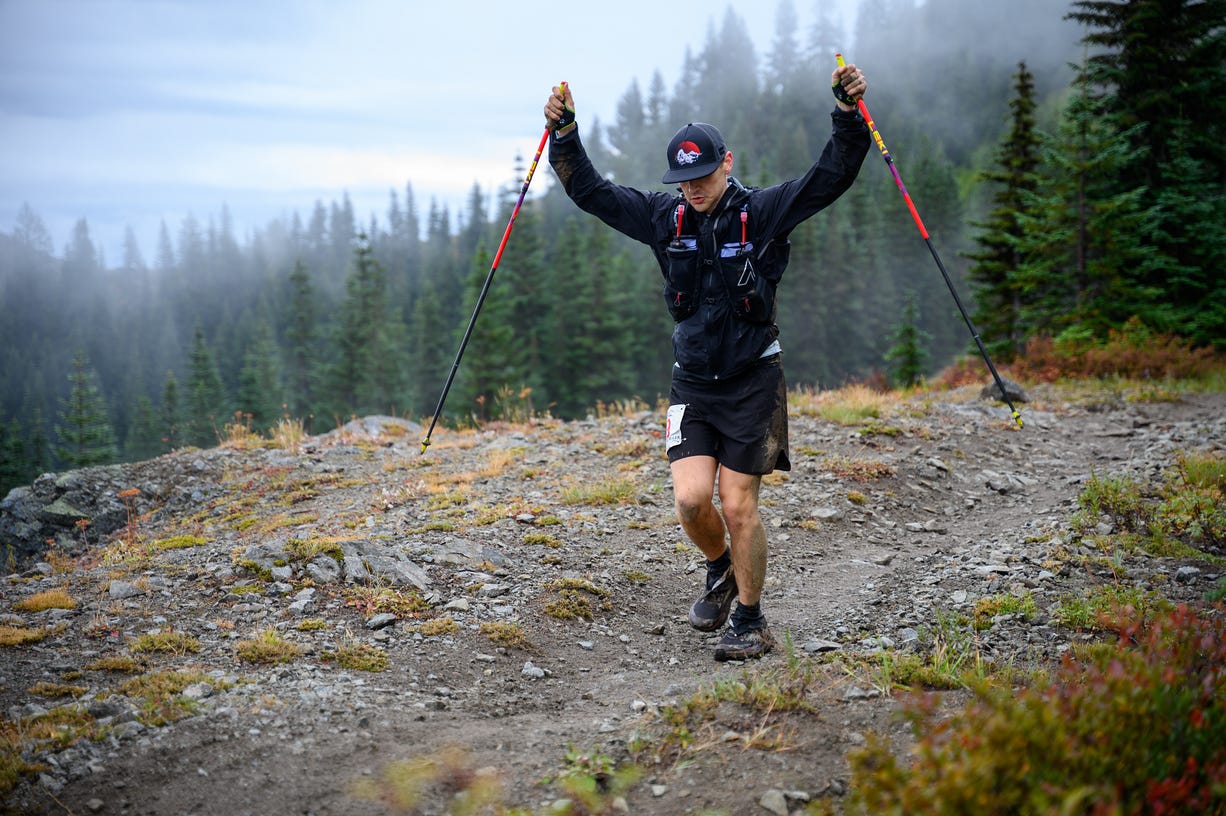
On the Dark Divide 100 pre-race call, the race director made a series of comments that captured the essence of this run through some of Washington’s most remote mountains.
“The vert is the least of your problems.”
“One-third of the trails are unrunnable.”
“You’ll know where people have gone, but I don’t know if the word ‘trail’ really applies.”
Sardonic and soft-spoken, Sean Harrasser started this wild race in 2021. Nine people showed up, and it’s grown exponentially since. With it now being a qualifier for the famed Hardrock 100, 146 people registered this year — more than the previous five years combined.
It was hard to know in those pre-race hours how many of those comments were legit and which were exaggerated. The uncertainty concerned me most. There aren’t detailed race guides and pages of finisher reports to study for this race, or at least not yet. This was a bare-bones operation. And, as I reminded myself in the predawn darkness, that uncertainty and adventure was what I was most excited about.
Writing this in the days after crossing the finish line, I can confirm the vert wasn’t the biggest problem. But it also wasn’t the least of them, either.
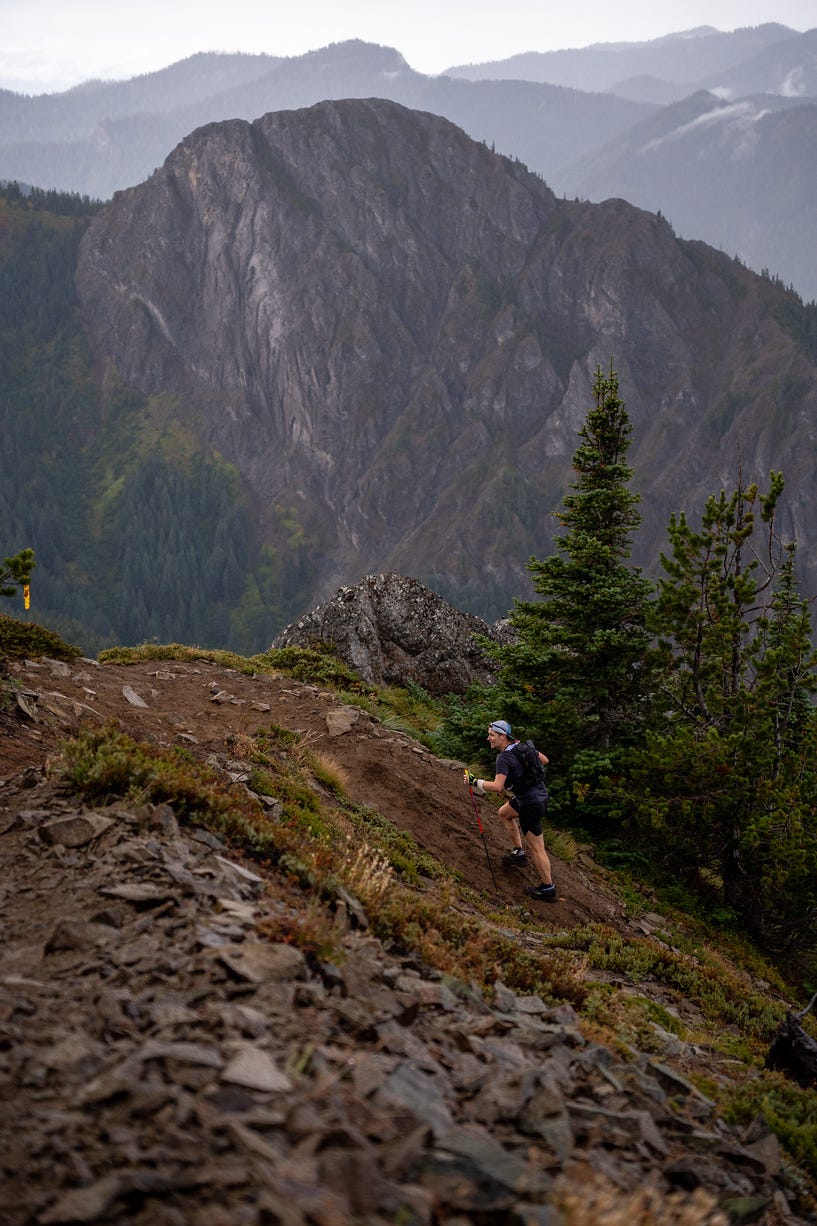
Aside from having a great name — not just for the darkness of the forest, but actually for John Dark, a 19th-century prospector — the Dark Divide is a 77,000-acre roadless area in Southern Washington. It’s about as close a glimpse into the past as one can get in this area, where towering trees and lush forests devoid of roads or many people have a way of putting life in perspective. (The Trump administration is seeking to open treasured areas like this one for commercial logging and development. Public comment ends Oct. 6; submitting comments against the change is easy and can be done here via Runners for Public Lands.)
Besides a glimpse into remote old-growth forests, the Dark Divide 100 is also a look at how trail racing used to be. When I approached the covered picnic area at the starting area and asked about race registration, a man pointed to a table a few feet away. “Check your name off the list, grab your bib and take your tracker.” It was a far cry from any other race registration I’d experienced.
I snagged pacer bibs — no paperwork or waivers required — and headed back to the car to set up camp. My crew of Mel, Simon and Alden gathered for the organizer’s race briefing. It was a low-key event and light on useful information; it may have actually added to the already confusing crew instructions about how best to navigate to aid stations the next day. Since there was no pre-race packet or detailed guide on how best to crew this race, everyone was told to rely on Google Maps. This did not always go according to plan. Many people ended up turned around and some even missed their runners entirely.
Where the meeting lacked specifics, it excelled in inspiration. Sean clearly cares deeply about this area and being able to bring people together to experience it. He cried as he described the beauty and the meaning it has had on his own life. I admired his rawness and honesty. And while I anticipated frustrations and growing pains throughout the adventure, I resolved to take that in stride. This was all part of the experience, and it would be a very different journey than any race I’d done before.
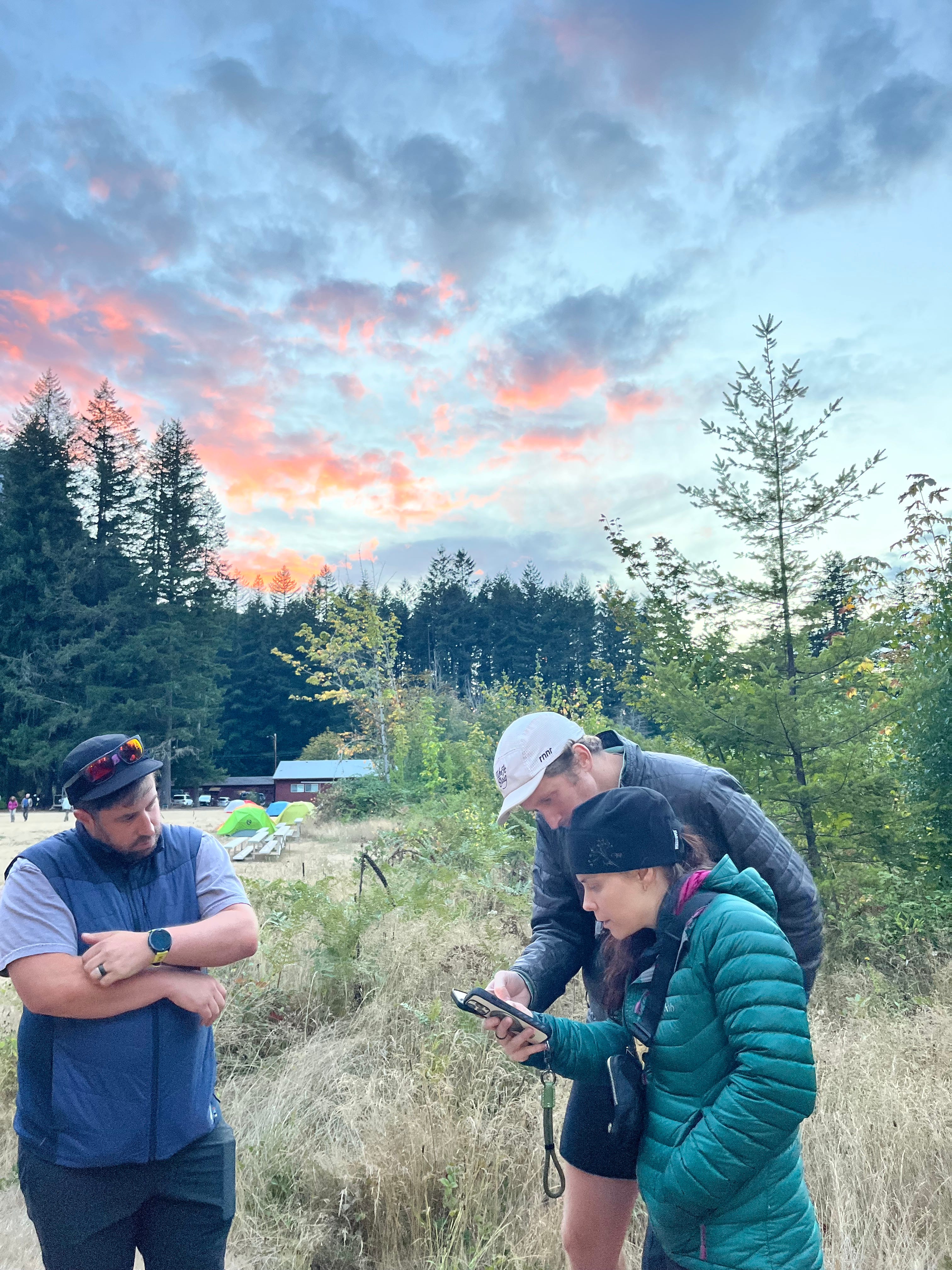
After a decent night of tent sleep, I was awake for about 10 minutes before the day’s first curveball came my way: The sticky Velcro on my gaiters detached overnight. Instead of keeping out dirt and rocks, my gaiters would instead flop around like fabric ankle necklaces. So it goes, I reasoned. A pour-over coffee would fix things. But both coffee filters tore mid-pour. This day was not off to a great start. Luckily, Alden was the hero of the morning and brought instant coffee as a backup.
Soon enough, we were all crowded around the start line, craning our necks to hear Sean’s final parting words before sending us off. I couldn’t hear anything but I did catch the Dark Divide starting count down: “420. 311. 69. Go.” (Sean really does have a unique brand of wit?)
Some jostled for their spot in those opening miles of single track near Angel Falls and Curtain Falls, while others of us dialed in for a steady pre-dawn effort. I felt comfortable as we came off the trail, eased onto the paved road and turned up the Forest Service road we’d return to 90 miles later. Smooth. Cruisy. Cool temps and some overhead clouds. Perfect day for a long run.
With daylight coming, I took my headlamp off and prepared to put it in my pack. Then my legs got tangled up with literally the only stick on the entire road. I tripped to the ground and heard the crunch before I saw the damage. I landed squarely on my headlamp and shattered the plastic casing. Luckily, the light still worked (and my glove protected my hand from the shards). If problems come in threes, I was glad to have gotten them all out of the way early. Now I could just focus on moving. And that meant the first big climb of the day, to Tongue Mountain.


Going into this race, I studied the course intently but did not memorize the route. I wanted to be surprised, and I also didn’t want to know how hard certain segments would be. So I was surprised to see someone galloping downhill toward me on the first out-and-back section of the course. A group of five soon followed, and then a bunch more. It was a tight fit on that section of the course — this was probably more people than had been on this trail together at one time ever. Bit by bit I made it up to the turnaround point and first big view of the day. Unlike Barkley, there were no trinkets to grab or things to mark our bibs. I took a couple minutes for a photo and some salt pills, thinking how refreshingly cool the day was shaping up to be.
Rolling into the first aid station, I wondered if anyone I shared the tracking link with had been watching for updates. If they had, it turns out they would have been disappointed! Volunteers quickly pulled me and another runner aside to fix our trackers that hadn’t pinged all morning. Soon enough, I was topped off on fluids and grinding up to the ridgeline. This was a surprisingly runnable section of the course, with 360-degree views and some spitting rain. These were the photos I’d seen on the website when I registered. They don’t represent the entire course, and much of the rest of the day and night would be in the woods. But this was a special part of the course that I knew in the moment would stick with me for a long time.
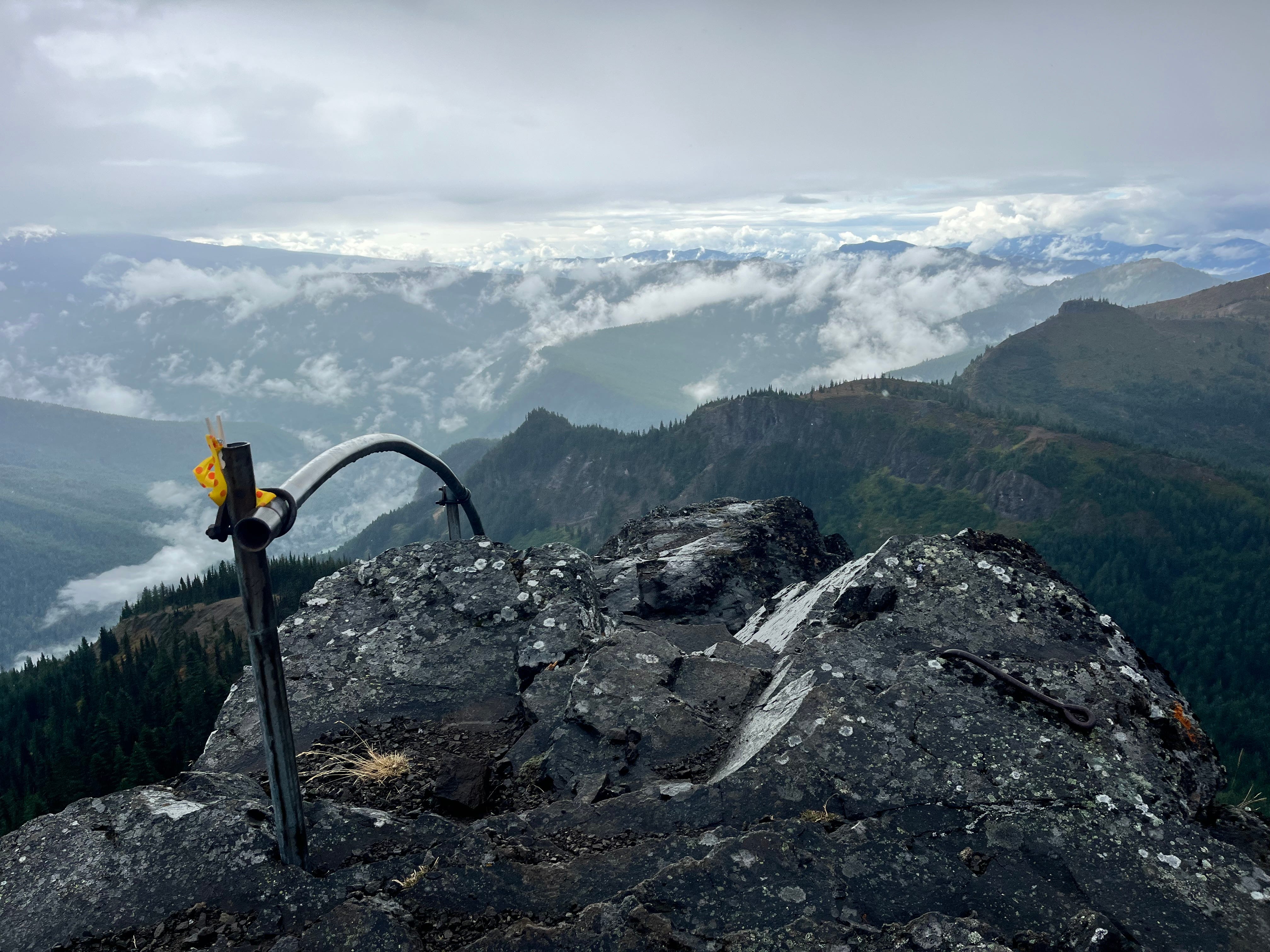
The climb up Sunrise Peak lacked a sunrise but did include an ice-cold summit railing and a Teletubby that might haunt dreams. After doing battle with some encroaching bushes while traversing the gutter of a dirtbike trail, the 6-mile descent into Dark Creek Aid was dangerously smooth and fast. Rolling into the aid station, I got extremely excited to see my crew for the first time.
I was feeling good 25 miles and 8,000 feet of climbing in. Really good. Alden and Simon fixed up my headlamp with some athletic tape, and Mel restocked my vest. I got the honor of being the first person to crack open the aid station’s medical kit — for a hand injury that stemmed from a misadventure with pasta water and open flame a week earlier.
Dry socks. Full vest. Can’t lose. That is, until I lost my balance while tip-toeing across the creek 50 yards outside the aid station and fully submerging my foot. It was bound to happen sometime. It wouldn’t be the last.
The next 28-or-so miles had just one aid station midway through. It was the crux of the course, the part where long bouts of solitude are interrupted by thoughts of “Where the actual hell am I?” The race organizer said that he’s seen people totally shattered by the time they get to mile 52. It’s where most people who drop out opt to do so. Bearing all that in mind, I locked in and kept climbing. At one point when I’d been alone for about an hour, I thought about how wild it is that literally everything I could see — the trees, the moss, the mushrooms, the soil — was alive. This is the ruggedness I’d wanted most when I signed up for this race. It was beautiful.
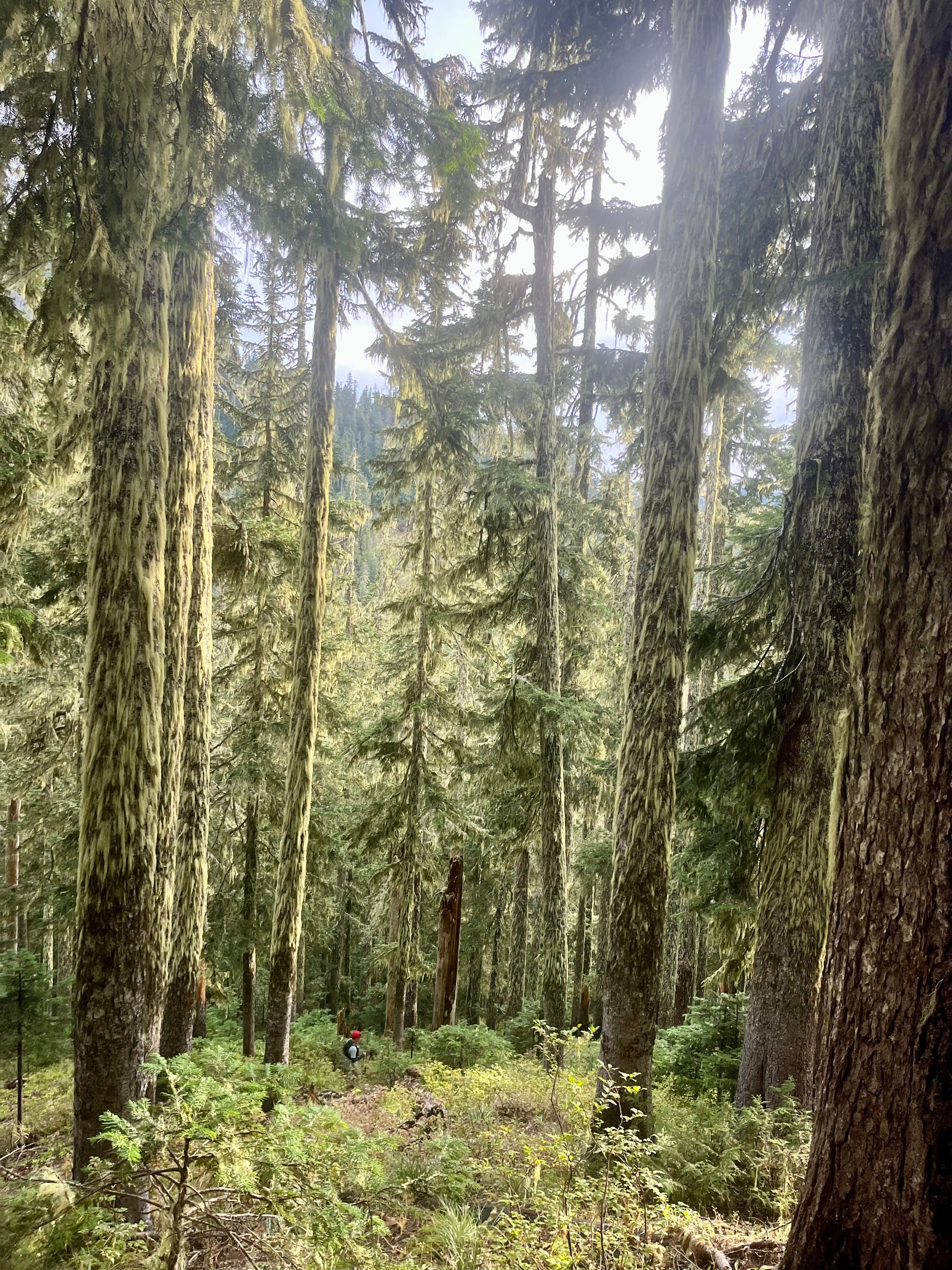
But sections of this trail were in a deep trough, with hip-high edges on either side and an angled gutter that forced my feet to be everted for long, grindy sections. My ankles were starting to feel it. The terrain was getting more bonkers with every mile. And then it just disappeared, one of the “you’ll know where people have been” sections, as advertised. I checked my watch a few times and suddenly heard a bunch of voices up ahead. They were backtracking, worried they’d cut the course. We compared maps, searched for ribbons, and as our group collected a half-dozen other runners, decided we’d stick with what seemed obvious, GPX file be damned. It got us back on track, and that track was bushwhacking before more deeply rutted out “trail.” My pace was steady, but fatigue was building. I cranked my toe on a root and grimaced as the nail ripped back. “What a way to drop,” I thought. Across a section of babyhead rocks, we entered the mile 39ish aid station. I took down a Coke, quesadilla and gel and headed back up the “very difficult” trail toward the infamous Snagtooth trail descent and climb.
This is one of the two areas where I was at my absolute lowest and dropping out didn’t seem like such a bad idea. We’d been on a lovely, flowy section of runnable trail. Then, the trail shot uphill. Fine enough, I thought. But then it dropped down — about 900 feet down in less than a mile. Steep step-downs on loose dirt and roots. Down and down. And what did it lead to? A sweeping vista? A waterfall? Nope. Just a stretch of pavement that doubled as the turnaround point. Crossing paths with someone on the trail, I described the trail as “psycho.” I had other choice words for the race director but had to smile at the yellow signage that said unhelpfully: “You are on a hill.”
I caught back up with a guy I’d run with off and on for 45 miles and we chatted about our days. I was making progress, and knowing that the worst of the out-and-backs was now behind me, my mood was improving as evening neared. The views through the forest made all the suffering more worth it, as did the sunset view as we approached the mile 53 aid station. I’d made it there before needing to pull out my headlamp. I’d met an unofficial goal for the day.
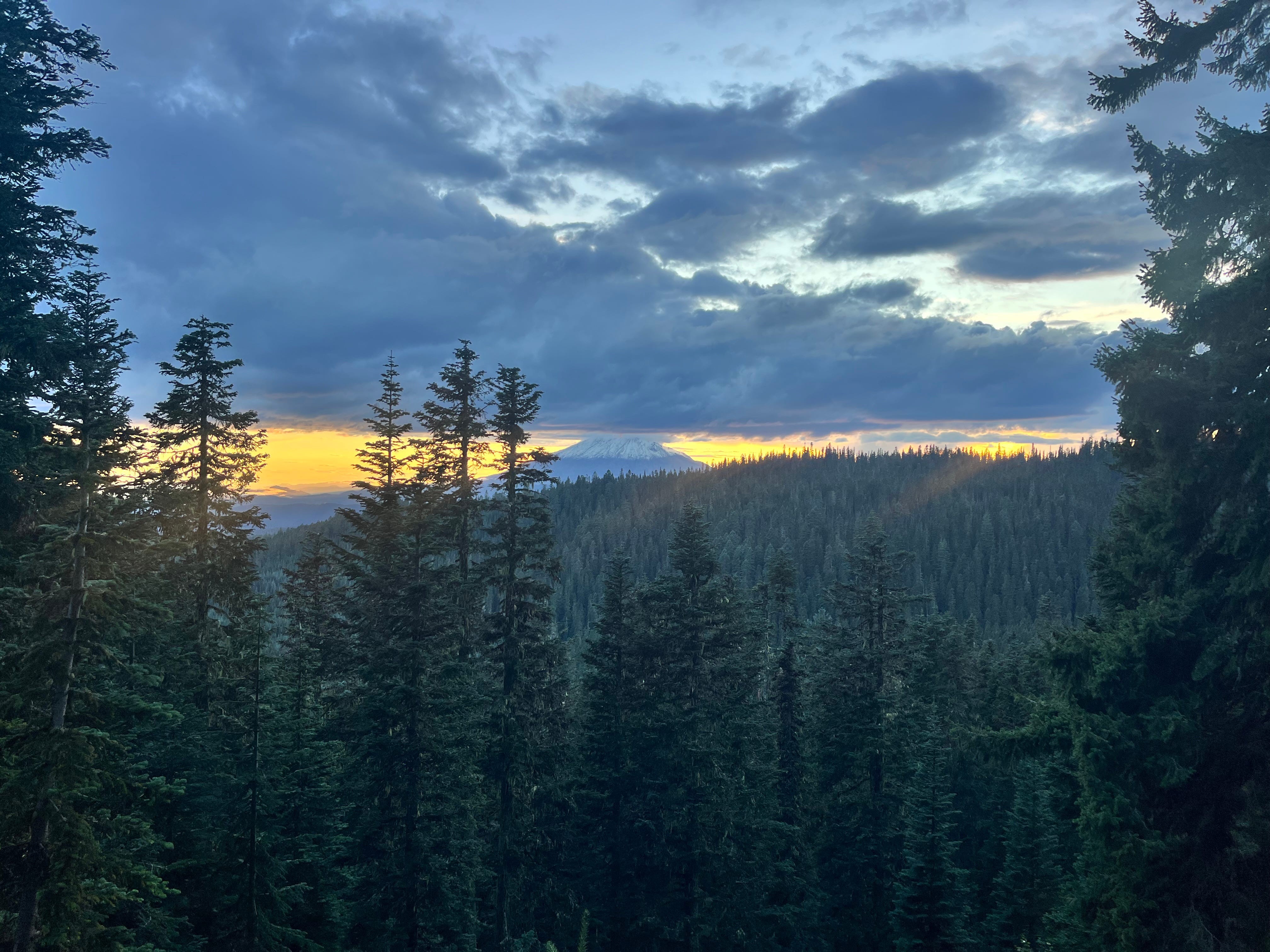
I’d fallen behind on calories and needed a reset when I saw my crew. I also needed a caffeine jolt before the nighttime section. Mel, Alden and Simon were ready to NASCAR crew me before I told them we could slow things down. I had been on or slightly ahead of my 32-hour pace goal up until that point. They told me stories about other crews getting lost and the confusing directions. I started shivering, changed shirts and shoved a puffy jacket in my pack.
I asked my crew to grab my unused caffeinated Precision gels. A hit of that rocket fuel would surely help me get cranking again.
There was a problem, though: There were none.
That didn’t add up — I’d ordered a whole box before the race and lined them up on my table at home as I packed. My crew scrounged for all my Precision gels and not a one had caffeine. My remaining brain cells started to make the connection: The Precision gels I’d been strategically dosing all day were just normal gels. My only caffeine had been some Coke and a cup of instant coffee in the morning!
It explained some of my fog going into the evening, when I normally feel much more alive during long ultras. I panicked. My crew whipped up some instant coffee. I drank that while simultaneously being in awe that I’d made it so far with the caffeine placebo effect, while also kicking myself for screwing up such a critical part of my plan. Oh well. We needed to get going.
I checked out of the aid station at 8:30 p.m. with Mel leading the way. At least I’d have company to keep me awake during our long walk through the woods.
Perhaps unsurprisingly, this is where things get blurry. After the longer-than-usual aid station stop, we were back cruising. I could tell the forest around us was old and tall and magnificent. But it was also pitch black and we were in the don’t-lose-too-much-time-overnight and don’t-get-too-cold part of the journey. Our catch-up and the downhill made the hours fly by. In seemingly no time we were already at the next aid station — one with a remarkable spread that, in hindsight, I wish I’d taken more advantage of. If only I’d known that the next crux of my day was about to begin.
The struggle started just a couple miles later. At 60 miles and 16,000 feet of climbing, my legs were less springy and more shuffly. I caught a root and crashed to the ground, a classic tuck-and-roll as well as a wake-up call. Going forward, I locked my eyes onto Mel’s reflective feet and just kept moving as we started a 3,000-foot climb up to Quartz Butte. We heard waterfalls and saw creeks, but in the darkness, it was hard to appreciate the beauty — if I were to go back and run any single section of this course, it’d be this one.
We climbed our way out of the drainage and the sleepiness was kicking in. I counted down to the next aid station, where I planned on a hefty dose of liquid calories and, I hoped, a cup of coffee. But hopes of a caloric and mental jolt here were quickly dashed when I realized this was among the most primitive aid stations on the course. The volunteers were great, but the offerings were sparse: no drink mix and minimal-to-no hot vegetarian options. I downed some Coke and started shivering uncontrollably again before we headed back out for the coldest part of the morning.
I was more than a little apprehensive about the remaining overnight hours. I was behind on food and under-caffeinated, and the rain was picking up. At one point, I thought the short, green-leafed clovers lining the trail were miniature cactus — in an old-growth rainforest. At another, we both pulled off the trail to pee. I nearly fell asleep standing up, and when I looked back and saw a light coming toward me, I got frustrated about being passed by a runner for the first time on this section.
I was just about to say “hello” to the person as they approached. Then I realized: It was Mel, standing right in front of me.
“I didn’t lose you, did I?” she said, joking. No, but almost!
Then came the 3,000-foot climb on what seemed more like a goat path than a proper trail. I tried to stay positive, and Mel made a comment about the fancy trail footwork that’ll make me never hear jazz the same again. But fatigue was wearing on me.
It was the second low-point on the day when bailing didn’t sound so bad. We’d climbed nearly 6,000 feet together, and I was at 20,000 for the day. At least I knew there was an aid station with crew coming up, and that would provide a reset that would help get the train back on track. We saw the headlamps coming toward us and I realized it was yet another out-and-back section. But through the brambles and ridiculous rutted-out trail, we both laughed: Alden would get a taste of what the journey had been like in the first 100 yards of his pacing duties.
Instant mashed potatoes, quesadillas and coffee by the fire never tasted so good, that is, once I stopped staring blankly at the plates in a sleep-deprived, lights-out stupor. Besides being immensely grateful for the volunteers, I was so appreciative of my crew. Simon, in particular, was such an anchor in the whole adventure, from hosting us in Seattle to handling a big chunk of the aid station driving. The whole team had also barely slept for 24 hours, and they were here. We all were, watching the sky lighten together. It’s every bit as rejuvenating as I remembered from past races, even without the actual sunlight to warm my skin. It was my second, longer aid station stop of the day, and it was absolutely necessary.
About 30 minutes before daylight, Alden and I headed out and up the trail I’d just come down.
We hadn’t seen each other in the seven years since I moved away from Phoenix. We’d talked when I was making my career pivot a few years ago and texted more recently. But right off the bat, it felt like we were long-time friends out for a typical Saturday morning run. The conversation ping-ponged from old friends and new ones to family histories and work. I was delirious and the conversation got deep. Around mile 90, as we trudged up a hill in the pouring rain and sleet, I said something I thought to be incredibly profound that turned out to be something along the lines of “You ever wonder how weird life is?” (Yeah, I was tired.)
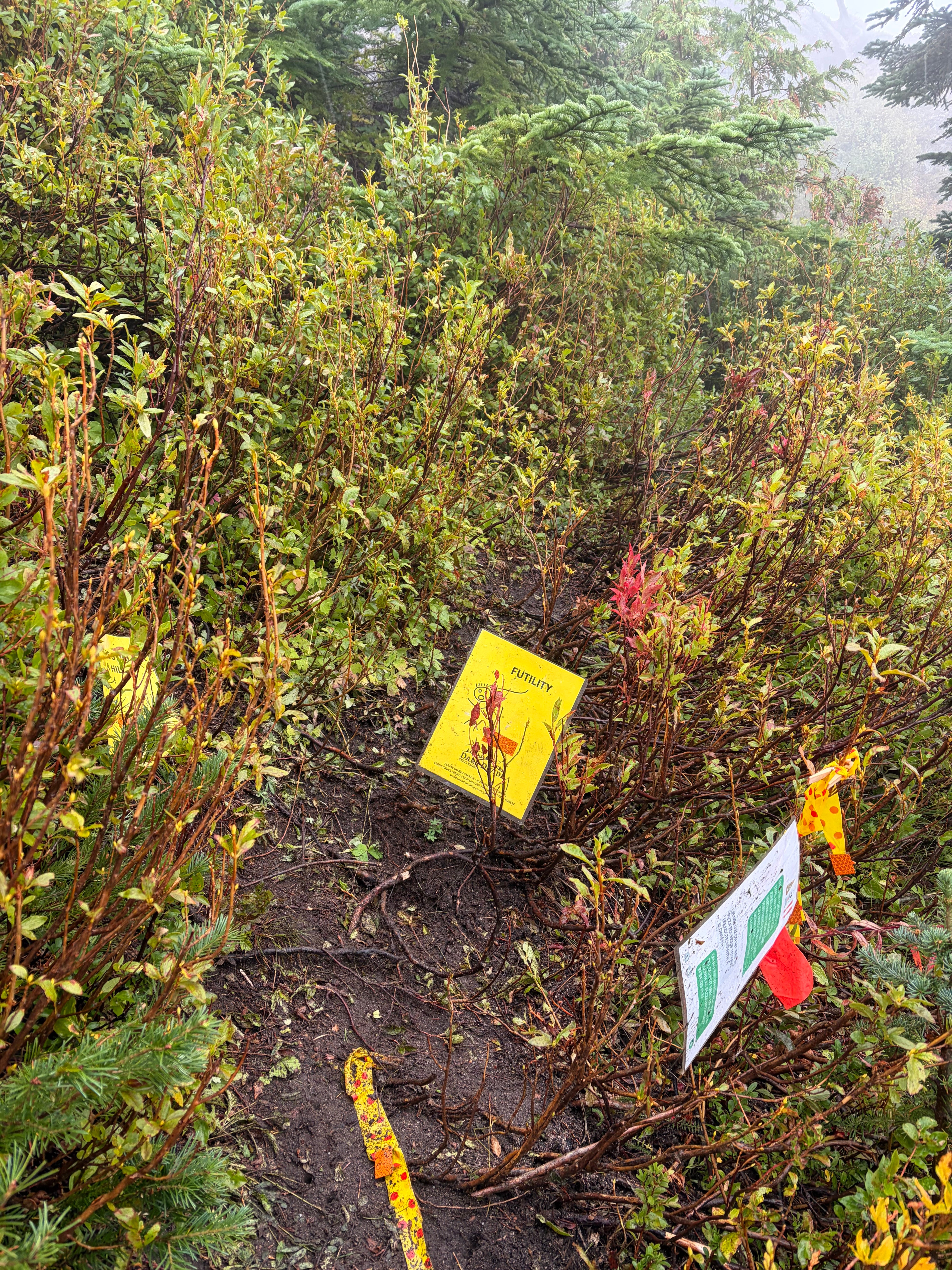
Conversation and philosophical/hot takes aside, there are two moments from this section that will be seared into my brain. The first was Jumbo Peak, a benevolent name for arguably the most absurd challenge of the entire run. At mile 83, we veered to the right and saw a ribbon high up on the 30-40% grade. It was more climbing than running, followed by some treacherous bushwhacking through the huckleberries. There’s no peak this year, just a turnaround point marked by a sign partway up the hillside that said so much with so little: “Futility.”
Was it the kind of silly out-and-back that had punctuated this race? Yep. Was the pointlessness also fun in a twisted way? Yes, or at least was when it was over!
An hour or so later, we were back on the trail I’d run out on a day earlier. It was a steep, mostly dirt section where my shoes were sliding out in mostly dry conditions. I remember thinking the day prior, “This would be hell if it was raining.” I was right. This would be the section’s second biggest obstacle.
Rain had turned the dirt to the slickest kind of mud, with rivulets of water carving new notches into the trail. There was at least a half mile of this, and my feet were already soaked. So through the mud I went sloshing. It was smooth enough until one foot went out, and then the other, and then WHAM, I was on my left side with my right leg angled back. “That could have been bad,” I thought. No bother, I was up and going until a few steps later, when I went down on another slick section. This time, though, I landed on my butt and my trekking poles shot me forward like a snowy mountain glissade. I don’t know exactly how far I rocketed downhill, but it was far enough to consciously have the thought while sliding, “This is fun, but this could also be dangerous.” I braked on a rock and stood up caked in mud. Aside from worry about the chafe potential — not great! — all I could do was smile at the absurdity of this wacky sport.
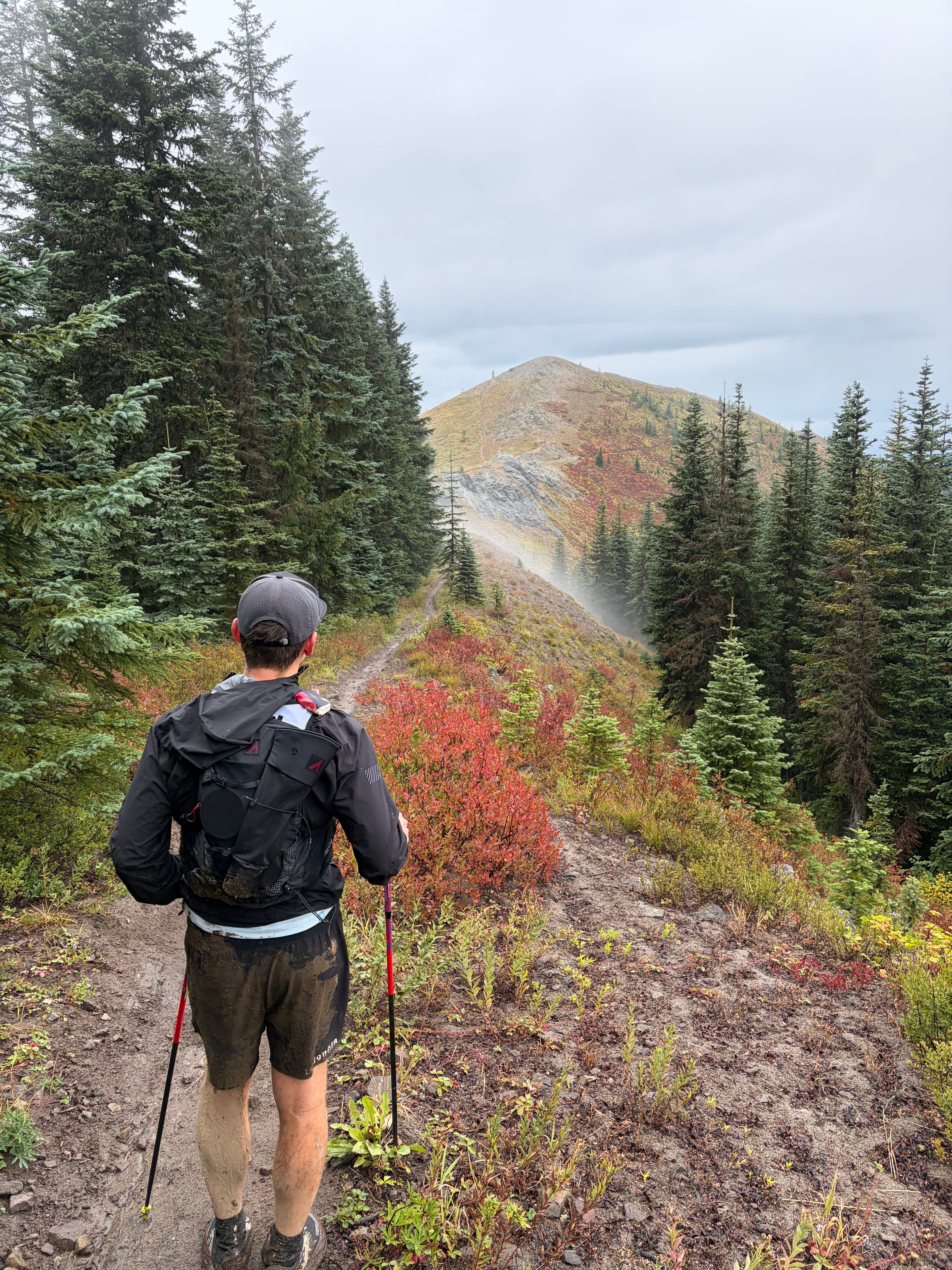
Soon enough, we were back on beautiful ridges, where Alden pointed at peaks and I tried futilely to register what he was saying. I downed another gel and we picked our way along the ridge. When I realized we did not have to go up Juniper Peak again, a wave of relief crashed over me. We were done climbing! My watch said I’d done more than 28,000 feet since the start, and it was almost all downhill from here on incredibly runnable and swoopy terrain. Suddenly, I was amped as Alden led the way into the final aid station. I was racing to get going as I swapped out socks, lightened my pack and headed out for the easiest stretch of the entire run: 9 miles of gradual downhill forest road.
The first half was quick and smooth. I was energized, and I was almost done. But soon, the leg fatigue caught me and I was relegated to ultra-shuffling on the normally lightning-fast downhill. My body was done. The sun had come out for the first time in a day and a half, and I was playing mind games with my watch as the final miles ticked down. I tried to process what all I’d just done, but even that wasn’t happening — after so much sensory input, my brain was over it, too.
A left on the paved road and a pair of rights later, the finish line came into view.
I’d done it: 34 hours and 10 minutes after I left, I was back where I started. I was 44th of 103 finishers — an additional 20 people dropped out, and 23 never make it to the start line.
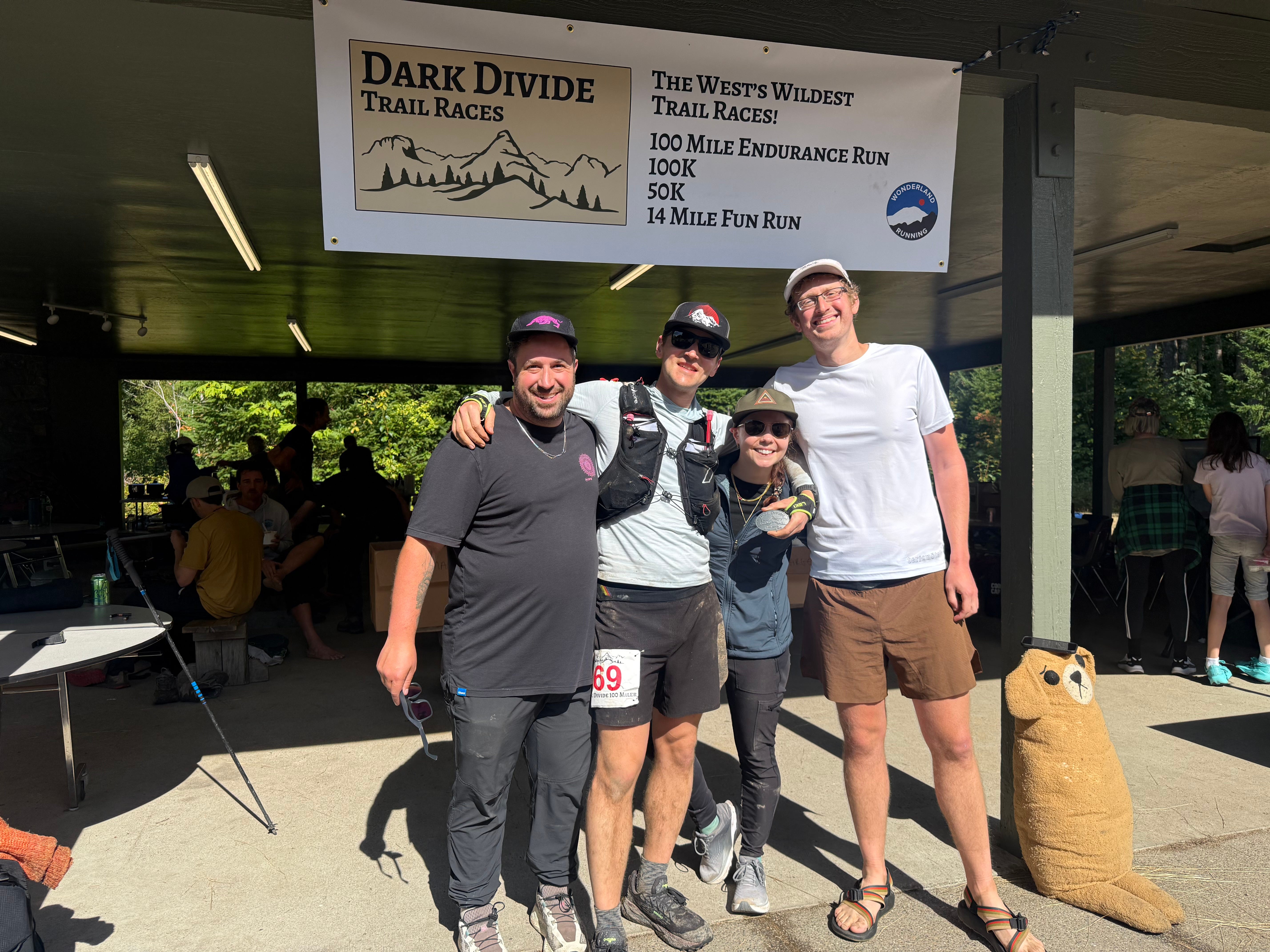
It was five hours longer — and 5,000 feet steeper — than my prior 100-milers. A week later, I maintain it was the hardest race I’ve done. I said something similar about Western States last year, but that was a product of my own dumb decision with my feet and blisters. My own missteps with the broken gaiters, busted headlamp andcaffeine screw-up didn’t help this time. But Dark Divide was harder on a deeper level that stemmed from the rough trails and tough conditions.
Sean, the race director, handed me my buckle and I made a comment about the vert (which, indeed, wasn’t my biggest problem but also wasn’t the least of them). He pointed at a nearby mountain and said something in classic Sean form about there not being any other way to go up it than up. Sure, Sean. We laughed. But, fair point.
Besides the fatigue and my ankles and lower legs being locked up and swollen, my brain was still firing. I was pondering something Alden had said 50 miles earlier when I was gearing up for the night.
“Is it the race you wanted?” he asked.
When I was deciding which race to run this year, I sought out a grassroots, rugged, hike-heavy event. After all the fanfare with Western States last year, I craved a low-key mountain adventure. I wanted proof that finishing High Lonesome wasn’t a fluke. I wanted to go play and occasionally suffer in a rugged and remote 100. Writing this a week later, with my ankles mostly back to normal size and the fatigue mostly cleared up, I stand by what I told him.
“This is the race I needed.”


Fantastic race report. A friend ran the 100 this year & she said you did a great job capturing the race here. It’s been on my radar, and your (& her) descriptions both discourage & boost my interest 😂
Wow. That was an epic!